
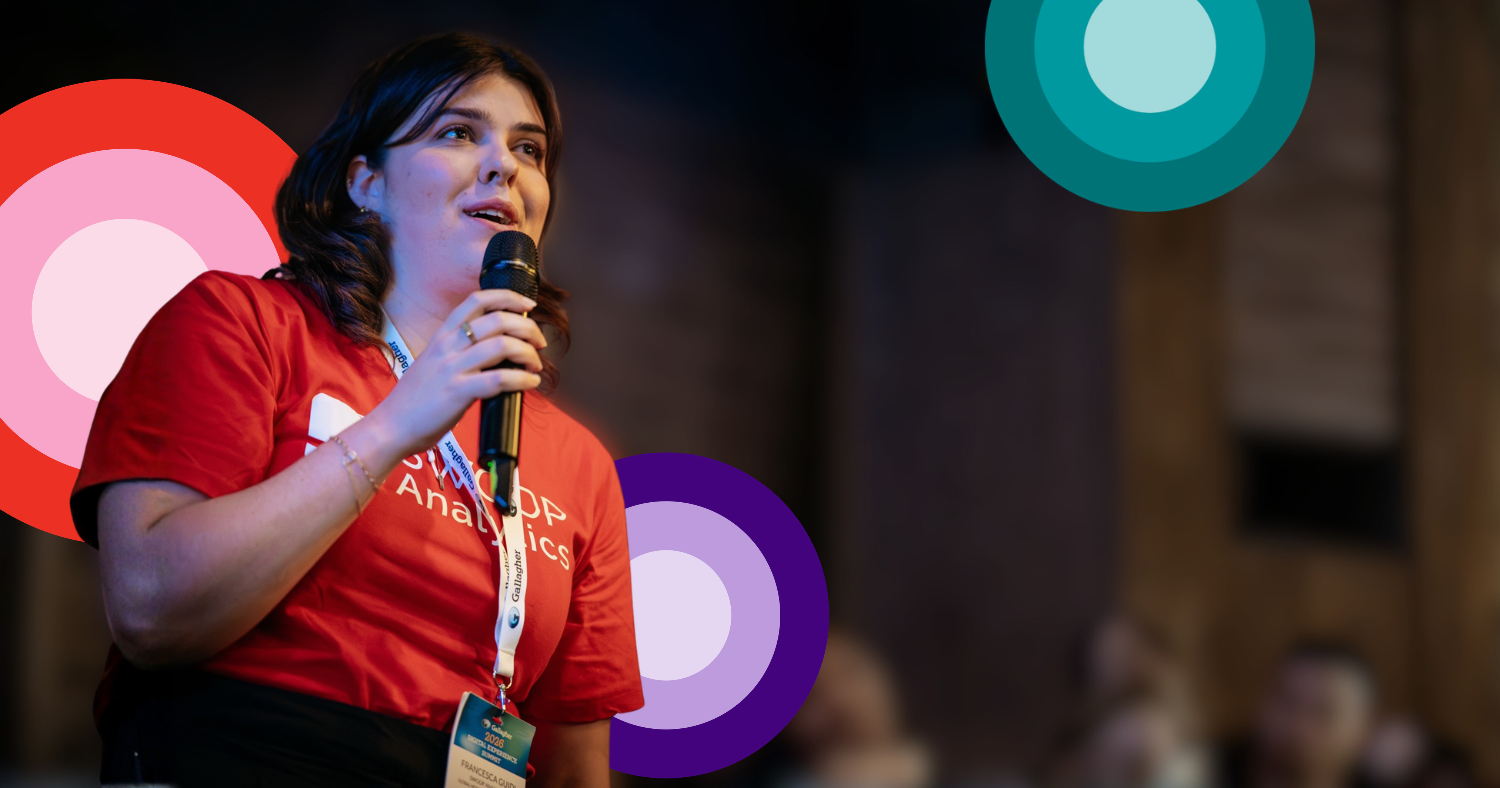
"If it's not on email, then it doesn't exist."
That was one of the comments that stuck with me after spending time talking to internal communication professionals at Gallagher's Digital Experience Summit last week.
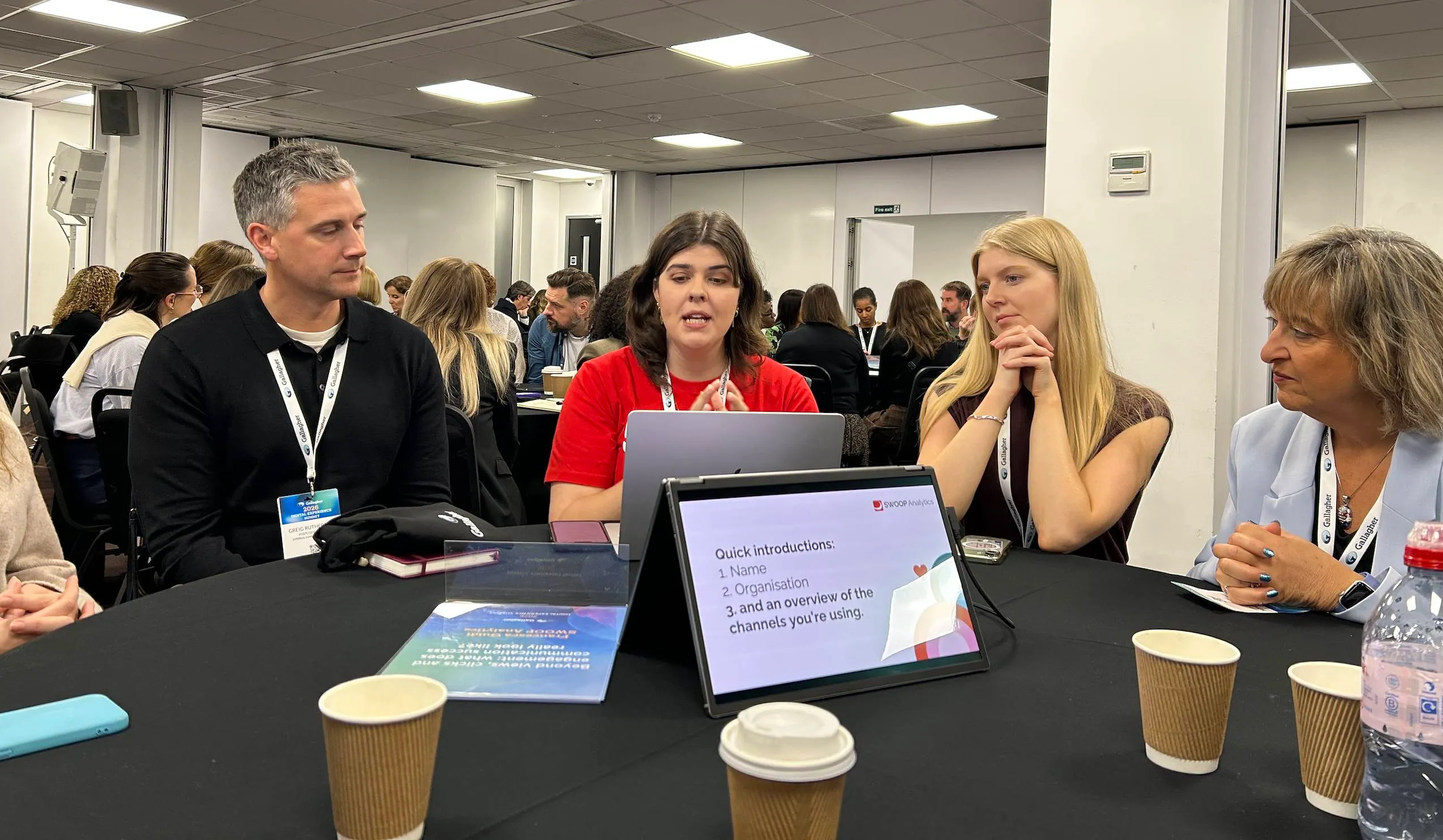
Me (in red) facilitating a roundtable discussion at Gallagher's Digital Experience Summit in London.
And judging by the conversations I had, it's a sentiment plenty of communicators would recognise.
Despite years of investment in digital workplace technology, email remains the default communication channel in many organisations.
We have Microsoft Teams for collaboration, Viva Engage for conversations, SharePoint intranet for information sharing, and now AI is changing how employees find and consume information.
Yet somehow, we're still relying on email to make sure people get the message.
Why?
Those conversations left me wondering whether email's dominance tells us more about our inability to measure communication effectiveness than it does about how employees actually want to communicate.
More channels, but are we communicating any better?
One thing became clear from the conversations at the Gallagher summit. Organisations certainly aren't short of communication channels.
If anything, they have more than they know what to do with.
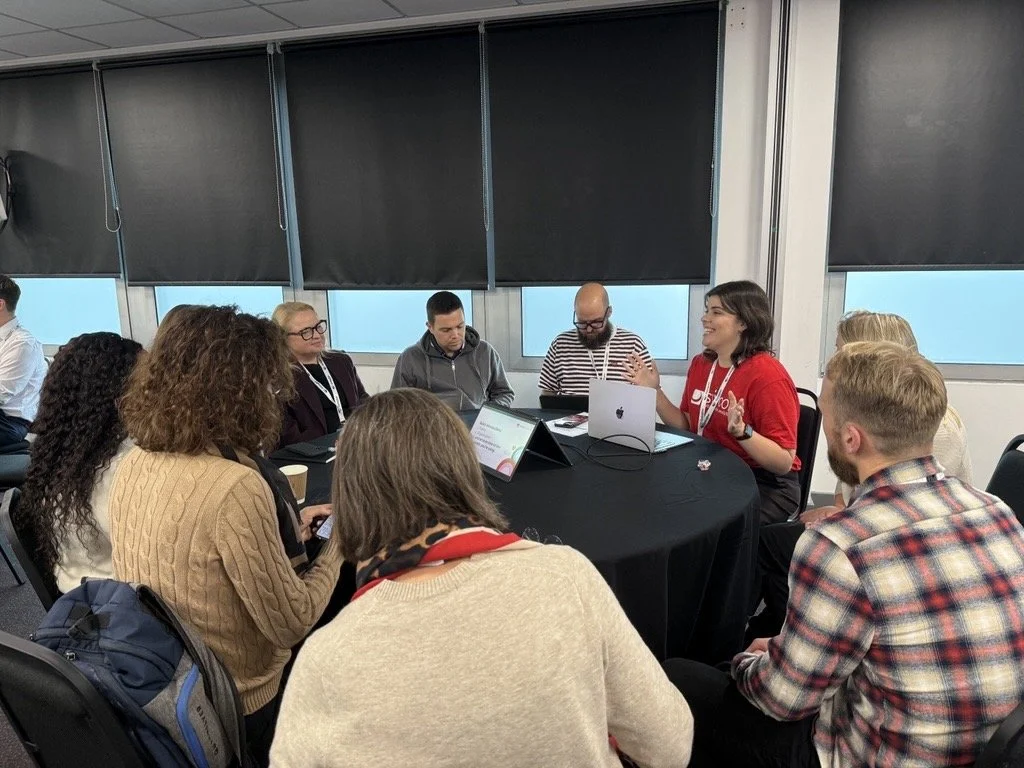
Facilitating another roundtable discussion at Gallagher’s Digital Experience Summit in London.
But having more channels doesn't necessarily mean employees are better informed, more connected or more engaged.
Communicators described struggling to understand what each channel should be used for, how they complement one another and whether employees are using them as intended.
Microsoft Teams was an interesting example.
There's an enormous amount of communication happening in Teams, but that doesn't necessarily translate into broader organisational conversations. Information can become trapped in individual chats or teams, rather than being shared more widely.
Meanwhile, email remains the fallback when organisations want to make sure something gets noticed.
One participant summed it up perfectly:
"Email is still king! We cannot escape it."
But perhaps we're asking the wrong question.
Rather than asking which channel employees use most, shouldn't we be asking which channels are helping us achieve our communication objectives?
Is email really king, or is it just what we're used to?
Email certainly has its place. It's familiar, direct and useful for certain types of communication.
But are organisations relying on email because they know it's the most effective channel, or simply because that's how things have always been done?
Without evidence, it's difficult to challenge established habits.
Perhaps email remains king not because it's always the best option, but because we haven't demonstrated that something else might work better.
We're measuring communication. But are we measuring what matters?
This brings me to the strongest theme from the roundtable discussions: measurement.
One participant put it bluntly: "We are really struggling with the measurement part, so cannot even get to the impact part yet."
And they're far from alone.
Gallagher's 2026 Employee Communications Report found 70% of communication teams measure only basic outputs, such as clicks and opens, while just 12% connect communication to business impact.
That's a significant gap.
Most communicators can report how many people opened an email, viewed a SharePoint page or reacted to a Viva Engage post.
But did employees understand the message? Did it encourage collaboration, build trust or influence behaviour?
These metrics have value, but they're only part of the picture.
And the consequences go beyond reporting. Gallagher's research also found that while 73% of internal communication teams aspire to operate as strategic consultancies, only 18% currently do.
It's hard to earn a seat at the strategic table when you can't demonstrate the impact of your work.
What if we measured the whole conversation?
What would happen if communicators had a clearer picture of how employees engage across their entire digital workplace?
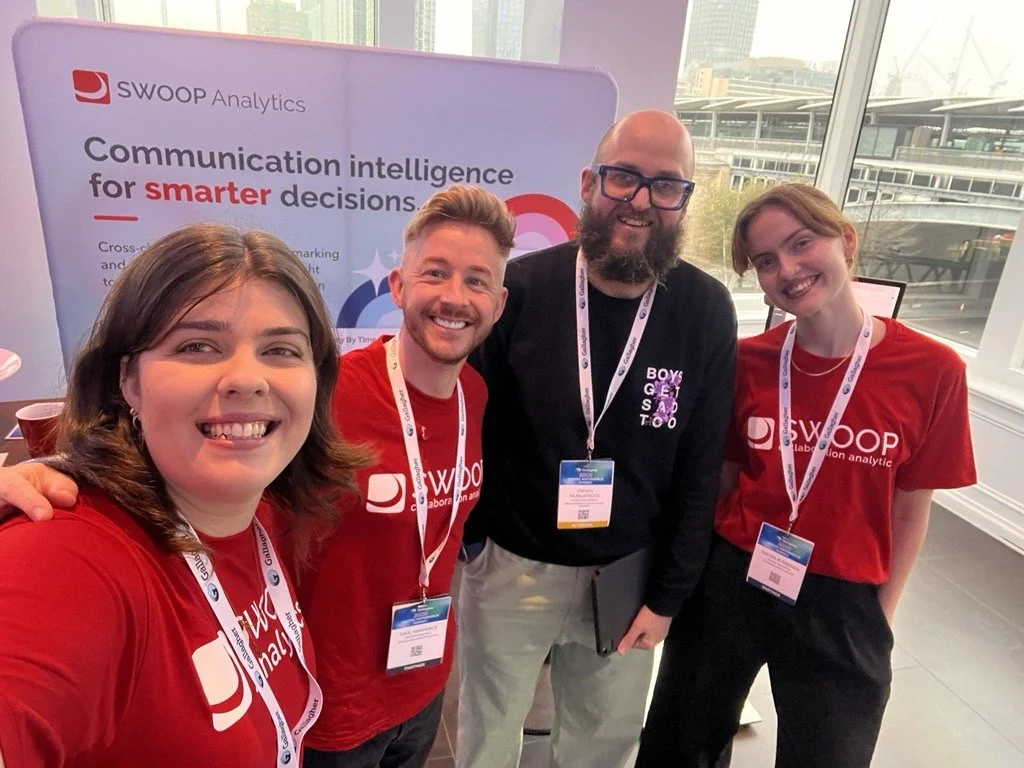
The SWOOP team connecting with fellow comms professionals at Gallagher's Digital Experience Summit
Not just email performance in isolation, or Viva Engage activity, or SharePoint readership.
But how those channels work together.
Imagine discovering that an email successfully alerted employees to an announcement, but the meaningful discussion happened on Viva Engage.
Or that employees were finding information directly on SharePoint without needing another email reminder.
Suddenly, the conversation changes.
Instead of asking whether email is performing well, we can ask whether email is even necessary for that particular communication.
Better measurement doesn't just help us improve our channels. It gives us the evidence to challenge whether we're using the right channels in the first place.
It might even give communicators the confidence to stop doing things that aren't adding value.
Including sending emails nobody really needs.
And then there's AI...
As if the communication landscape wasn't complicated enough, AI is introducing another dimension.
One particularly thought-provoking conversation at Gallagher explored whether AI could become a communication channel in its own right.
Instead of searching SharePoint or the intranet, scrolling through Viva Engage or finding an old email, employees may increasingly ask AI for the information they need.
If an employee gets their answer from AI, does it matter whether they visited the original SharePoint page?
And how do we measure communication effectiveness when employees aren't necessarily consuming information through the channels where it was published?
These questions reinforce something I heard repeatedly at Gallagher.
The way employees find and consume information is changing. But are our measurement approaches keeping up?
Perhaps it's time for a rethink
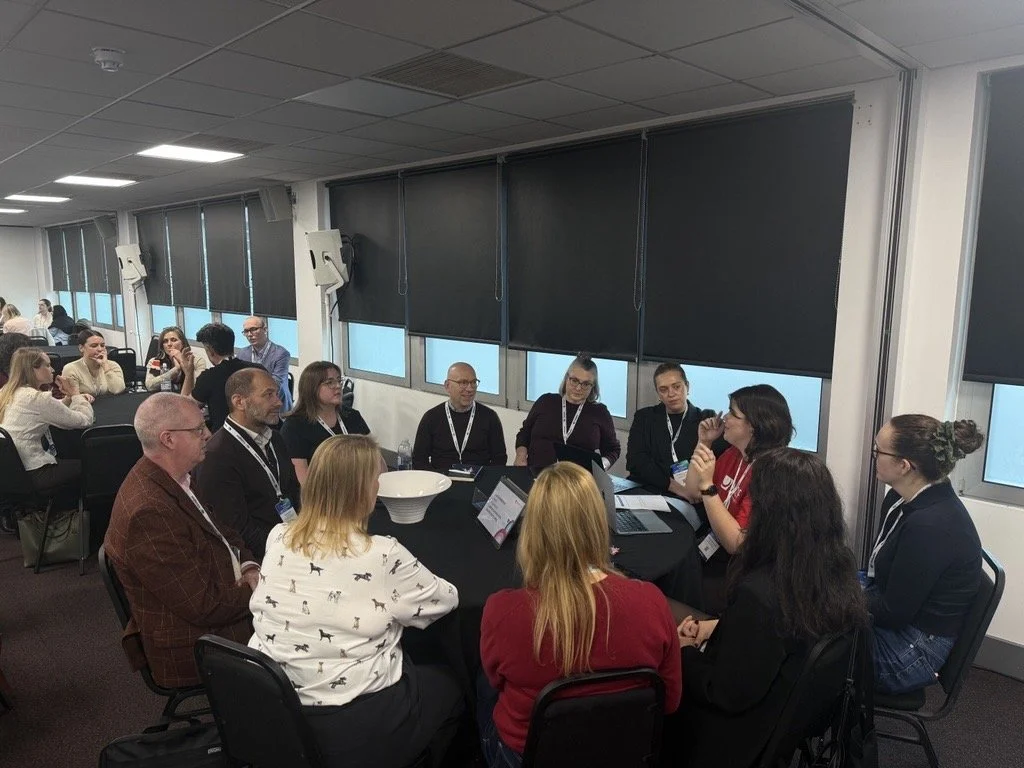
Facilitating a roundtable discussion at Gallagher’s Digital Experience Summit in London.
I left Gallagher's Digital Experience Summit convinced that communicators don't necessarily need more channels, more content or even more data.
They need a better understanding of what's working, what's not and why.
That means looking beyond individual channel metrics, understanding the bigger picture and being prepared to challenge long-held assumptions.
Including the idea that email will always be king.
Perhaps the future is about understanding which messages need to be sent, where they'll have the greatest impact, and whether they need to be sent at all.